
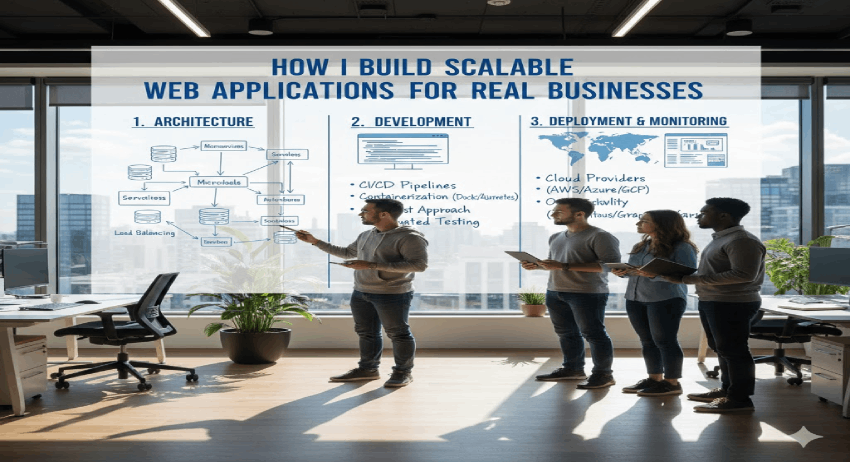
Building a scalable web application is not just about choosing the right framework or writing code that works today. It’s about creating a system that can grow with the business, handle increasing traffic, adapt to changing requirements, and remain maintainable over time. Through working on multiple real-world projects across different industries, I’ve developed a structured approach to building web applications that scale reliably.
This article outlines how I approach scalability—from planning and architecture to performance and long-term maintenance.
Understanding Business Requirements First
Scalability starts long before the first line of code is written. Every business has different goals, constraints, and growth expectations. Before selecting any technology, I focus on understanding:
- What problem the application is solving
- Expected user traffic now and in the future
- Critical features that must perform reliably
- Budget and timeline constraints
This clarity helps avoid over-engineering small projects and under-engineering applications that are expected to scale quickly.
Choosing the Right Tech Stack
No single tech stack fits every project. One of the most important decisions is selecting technologies that align with the business needs.
For complex, data-heavy, or highly customized systems, I often choose Laravel because of its strong MVC architecture, built-in security features, and excellent ecosystem. For content-driven or marketing-focused websites, WordPress can be the right choice when implemented with clean custom themes and optimized plugins.
The goal is not to follow trends but to choose tools that ensure stability, flexibility, and long-term scalability.
Clean Architecture & Code Structure
Scalable applications rely heavily on clean architecture. I follow principles such as:
- Separation of concerns
- Modular and reusable components
- Clear folder structures
- Meaningful naming conventions
By keeping business logic separate from presentation logic and database interactions, the application remains easier to extend and debug. Clean code reduces technical debt and allows future developers—or even my future self—to work efficiently on the project.
Database Design & Optimization
A poorly designed database becomes a bottleneck faster than almost anything else. I focus on:
- Proper normalization where required
- Indexing frequently queried columns
- Avoiding unnecessary joins and heavy queries
- Designing schemas that can evolve
Scalability is not just about handling more data but about retrieving and processing data efficiently as usage grows.
Performance Optimization from Day One
Performance should never be an afterthought. Even small optimizations early on can prevent major issues later. Some key areas I focus on include:
- Efficient backend queries
- Caching frequently accessed data
- Optimized assets and image handling
- Minimizing unnecessary API calls
Whether it’s server-side caching, database optimization, or frontend improvements, performance tuning plays a critical role in user experience and scalability.
Security & Reliability
A scalable application must also be secure and reliable. I follow best practices such as:
- Input validation and sanitization
- Secure authentication and authorization
- Protection against common vulnerabilities
- Regular updates and monitoring
Security issues can halt business growth instantly, which is why they are treated as a core part of scalability—not an optional feature.
Planning for Growth & Maintenance
Finally, scalability is about preparing for change. Businesses evolve, and applications must evolve with them. I design systems that allow:
- New features without breaking existing ones
- Easy deployment and updates
- Clear documentation and version control
By planning for maintenance and future improvements, the application remains stable and adaptable over time.
Final Thoughts
Scalable web development is a combination of thoughtful planning, clean architecture, performance optimization, and real-world experience. By focusing on long-term stability rather than short-term fixes, I aim to build applications that support business growth instead of limiting it.
If you’re planning a web application and want it to scale reliably as your business grows, building it right from the start makes all the difference.